Pakistani Teacher-Student Viral Video, Iraqi Woman-US Soldier Claim: How Fake ‘Leaks’ Are Used for Phishing Scams


A growing online trend of repackaging old or commercially produced adult videos as alleged “real-life leaks” is raising concerns over misinformation, clickbait and phishing scams.
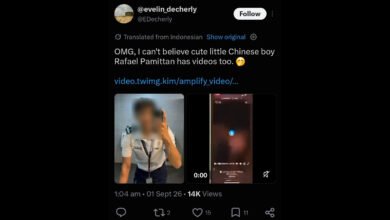
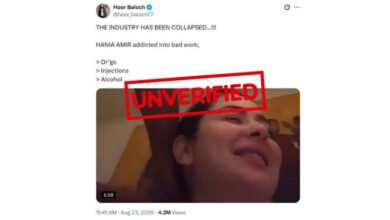
Recent viral claims, including an alleged Pakistani “teacher-student MMS leak” and a purported encounter involving an Iraqi woman and a US soldier, have circulated across social media and messaging platforms. In several such cases, sensational captions are used to make unrelated or scripted footage appear to be genuine incidents.
The tactic is not necessarily about the video itself. Instead, misleading descriptions are often attached to the footage to exploit curiosity and push users towards suspicious links, websites or social media accounts.
Pakistani Teacher-Student Viral Video Claim
One widely circulated example involved posts claiming to show a “30-minute” teacher-student video leak from Pakistan.
Fact-checking around the claim found that the footage being circulated was not evidence of a genuine classroom incident or a verified non-consensual leak. Instead, the material was identified as scripted adult content that had previously been available commercially.
The misleading Pakistani context was subsequently used to give the footage a new viral narrative and encourage users to search for or share the supposed “leak.”
Iraqi Woman-US Soldier Video Claim
A similar pattern has been observed with claims involving an Iraqi woman and a US soldier.
Social media posts have presented unrelated adult footage as a supposedly real encounter, attaching a sensational geopolitical or military context to the material.
Such claims can be difficult to verify once the original source is removed from the video and the footage is repeatedly reposted with different captions.
How Fake ‘Leak’ Stories Spread Online
The strategy generally follows a familiar pattern. Existing footage is given a new identity through sensational captions and then distributed across multiple platforms.
Fabricated Narratives
Uploaders can attach claims such as “MMS leak,” “private video” or “scandal” to previously available footage. The objective is to make users believe they are watching an exclusive or newly leaked recording.
Rapid Social Media Distribution
Once a sensational post begins attracting attention, copies can quickly appear on platforms including X, Facebook, Telegram, WhatsApp and other social networks.
Closed messaging groups can make verification particularly difficult because users often receive the video without any information about its original source.
Clickbait and Monetisation
The ultimate objective may be to generate clicks rather than simply distribute the video.
Posts can direct users towards external websites, shortened URLs, unfamiliar channels or social media accounts promising access to the “full video.” These pages may generate advertising revenue, collect engagement or attempt to obtain users’ personal information.
Viral ‘Full Video’ Links Can Be a Phishing Trap
Cybersecurity concerns become particularly serious when users are asked to click on links promising access to an alleged leaked video.
Fraudsters can use sensational content as bait for phishing campaigns. A user searching for a viral video may instead be redirected to a fake login page, a malicious website or a page designed to collect personal information.
Some websites may also use fake video players, countdowns or verification messages to persuade visitors to click additional buttons or provide details.
Why Users Should Not Trust Viral Captions
A video’s caption is not proof of its origin.
The same piece of footage can be repeatedly uploaded with completely different descriptions, locations and identities. Once separated from its original source, the context attached to a video can become almost impossible to establish from social media posts alone.
Users should therefore be cautious when a viral post claims to offer an exclusive “leak,” particularly when it asks them to visit an unknown website or download an unfamiliar file.
What To Do If You See Such Posts
Instead of clicking on a “full video” link, users should independently verify the claim through credible news organisations or established fact-checking sources.
Suspicious links should not be opened or forwarded. Users should also avoid entering passwords, phone numbers, email addresses or other personal information on unfamiliar websites.
The increasing use of sensationalised “leak” narratives demonstrates how misinformation and phishing can work together. A provocative claim attracts attention, while the promise of exclusive footage provides the incentive to click.
In many cases, the real danger behind a viral “leak” may not be the video at all—but the suspicious link users are encouraged to follow.
Disclaimer: Viral claims and online footage can be misleading or incorrectly labelled. Readers should verify the original source of any purported leaked material and avoid sharing unverified claims or accessing suspicious links.