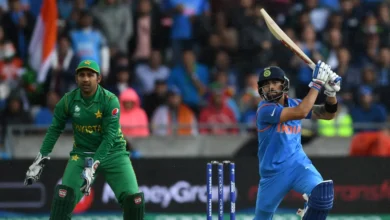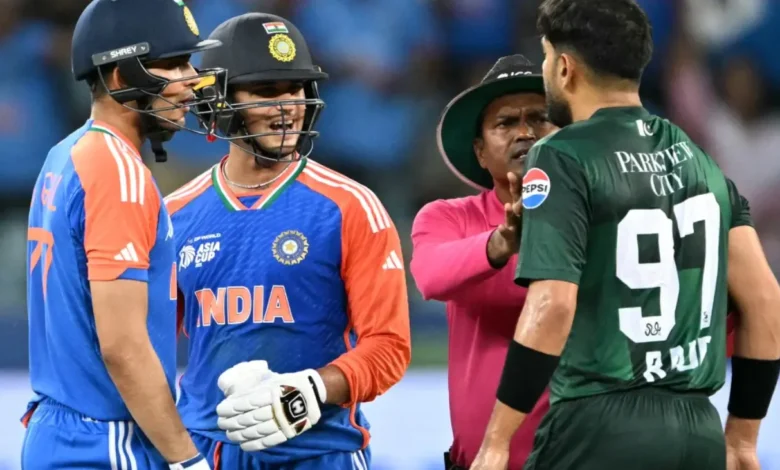
The International Cricket Council has finally broken its silence on the controversy that is developing around the upcoming T20 World Cup in 2026. The global governing body of cricket has responded firmly to Pakistan’s declaration that it will participate in the T20 World Cup but boycott the match with India at the group stage. The ICC warned that such “selective” participation undermines sport integrity and can have long-term serious consequences for Pakistan Cricket.
On Sunday, reports surfaced that Pakistan’s government had ordered the Pakistan Cricket Board to refrain from playing India. This highly anticipated game is set for February 15, 2026.
ICC Stresses Integrity in the T20 World Cup
The ICC emphasized the importance of all teams being on an equal footing when competing in a global tournament like the T20 World Cup. The ruling body stressed that selecting opponents goes against the spirit of cricket.
Also Read: Why India vs Pakistan T20 Match Cancellation Could Cost the Cricket Economy ₹4,500 Crore
The statement stated that “The ICC takes note of the announcement made by the Government of Pakistan regarding its decision to have its national team participate selectively in the ICC Men’s T20 World Cup 2026.”
BREAKING: The government of Pakistan has said that Pakistan will boycott their T20 World Cup match against India pic.twitter.com/ESu4llHICV
— ESPNcricinfo (@ESPNcricinfo) February 1, 2026
They also clarified that, while they are aware of the influence governments can have on events organized by the International Cricket Council, it is essential to strictly adhere to the schedule.
The ICC is awaiting official notification from the Pakistan Cricket Board. This selective participation position, however, does not align with the premise that all teams qualified to participate in a sporting event should do so on an equal basis.
Impact of Global Cricket Ecosystem
The ICC statement was not limited to today’s schedule. The ICC stated that these decisions harm cricket fans and the entire financial system of the game, from which Pakistan benefits greatly. The governing body urged the PCB to consider the larger picture.
Also Read: After the Budget, Gold and Silver Prices are Volatile: Now is the Time to Buy?
The statement went on to say that “ICC tournaments were built upon sporting integrity, competition, consistency, and fairness. Selective participation undercuts the spirit of these events and undermines their sanctity.” The ICC acknowledges that governments have a role to play in national policies, but this is not the best decision for the game worldwide or fans around the world, especially millions of Pakistanis.
Disrupting the World Cup Schedule will hurt the revenues and stability of sport worldwide.
The ICC is hoping that the PCB considers the long-term and significant implications of cricket in their own country, as it will likely impact the global cricket ecosystem, which they are part of and a beneficiary of.
The Status of Group A Dynamics and the Schedule
India and Sri Lanka will co-host the World Cup T20 in 2026. Pakistan was drawn in Group A with India and Namibia. The Netherlands, the United States of America, and Namibia are also included.
All Pakistani matches will now be played in Sri Lanka, not India. This is to accommodate logistical and security reasons. Pakistan will begin its campaign against the Netherlands on February 7. Then, they are scheduled to face the USA on February 10. Next is the controversial match against India on February 15. Finally, Namibia will be played on February 18.
Also Read: Viral Video Exposes Noida Road Harassment, Two Accused Taken Into Custody
The refusal to play a specific match against India, despite these concessions regarding the location, remains at the core of the issue. The ICC stated that the main objective of its tournament is the success of all its members.
The ICC prioritizes ensuring the success of the ICC Men’s World Cup, which is also the responsibility of its other members. This includes the PCB. The ICC expects that the PCB will explore a mutually agreeable solution that protects all stakeholder interests.
Consequences Technical: Loss of Points and Penalty for NRR
A boycott of the World Cup would be disastrous for Pakistan. The ICC’s playing rules state that refusing to participate in a match scheduled is a forfeit.
If Pakistan fails to participate in the match on February 15, they will forfeit two critical points. Two points can easily be the difference between a team making it to the Super 8s and semi-finals.
The damage could also extend to Net Run Rate, which can be a tiebreaker at ICC tournaments. There are stringent rules regarding forfeited games.
In clause 16.10.7, the rules state that if a team forfeits a match, “all 20 innings of such defaulting teams’ innings shall be considered in calculating their average runs/over over the duration of the relevant competition.”
It will be counted statistically as though Pakistan had batted for 20 overs and scored zero runs. It would dramatically lower Pakistan’s NRR and make it very difficult to qualify even if the team wins their match against USA, Netherlands or Namibia.
Waiting for Official Word
Despite the government’s statements, the ICC insists it has not yet received any official communications from the PCB regarding this boycott. Cricketing World is now waiting to see whether a solution can be reached before the the World Cup or if Pakistan decides to take a drastic step that could have a severe impact on its status in world cricket.
International Cricket Council is the world’s governing body of cricket. The ICC represents 108 member countries and governs the sport. It is also responsible for organizing all major tournaments, including the ICC Men’s World Cup and the ICC Women’s World Cup. The ICC has responsibility for the Code of Conduct and the Decision Review System.