What Is New UGC Equality Regulation? Why It’s Facing Nationwide Backlash?

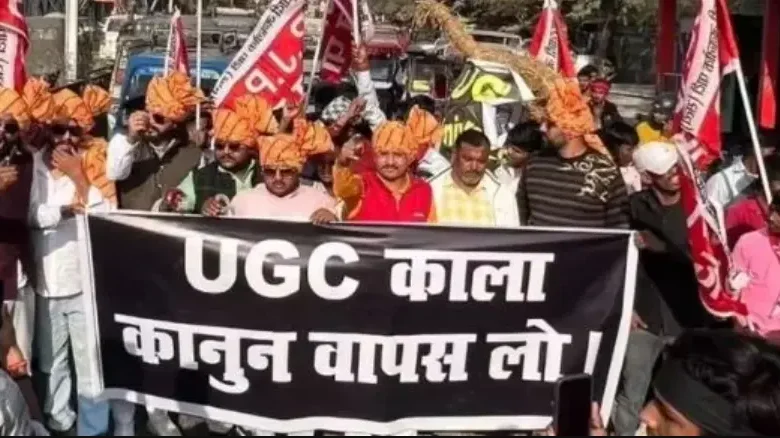
UGC Equality Regulation: A newly notified rule governing India’s higher educational system has ignited a political and social controversy that spilt out from the university campus onto social media. Supporters hail the University Grants Commission’s Equality Promotion Regulations for Higher Educational Institutions 2026 as a historic step towards social justice. However, several organisations from the upper castes across India have strongly opposed it.
The University Grants Commission introduced UGC Equality Regulations on January 15th 2026, with the primary objective to curb caste-based racism. It is the goal to create a dignified and safe academic environment that includes students, non-teaching personnel, and teachers. This new framework marks a significant shift by including the Other Backward Classes in the anti-discrimination measure. In the past, complaints mainly related to the Scheduled Castes or the Scheduled Tribes. These new UGC Equality Rules empower OBC employees and students to make harassment complaints.
श्री @nishikant_dubey जी,
— Jatan Acharya (@jatanacharya) January 24, 2026
यदि UGC के नियम सभी जातियों के लिए समान रूप से लागू है, तो इनके विरुद्ध कार्रवाई करके दिखायें।#ShameOnUGC pic.twitter.com/9v8k9VBWtG
Regulations require significant structural modifications. Each institution must now establish an Equal Opportunity Cell that caters to the SC, ST and OBC community. A university Equality Committee, with representation of OBCs and women as well as SCs, STs, and persons with disabilities, must also be formed. The committee must submit a six-monthly report to increase transparency and accountability.
The move was met with immediate criticism. The UGC Equality provision is vulnerable to abuse, say several upper-caste groups. Savarna Samaj Coordination Committee S-4, a coalition of groups in Jaipur, including Karni Sena and Brahmin Mahasabha, as well as Kayastha Mahasabha, has united to fight the decision. In Uttar Pradesh, the issue is particularly volatile. Yati N. Narasimhanand. Giri tried to go on a hunger strike against the rules and was placed under house detention.
UGC नियम—बराबरी या भेदभाव? 🤔
— अखण्ड भारत संकल्प (@Akhand_Bharat_S) January 25, 2026
विष्णु तिवारी निर्दोष साबित हुए, फिर भी 20 साल जेल! कानून का दुरुपयोग हकीकत है।
Draconian नियम अगर प्राकृतिक न्याय पर खरे नहीं, तो वापस हों। सरकार का नैतिक कर्तव्य है कि शंकाएं दूर करे।#Rollback_UGC #UGCRegulations #UGC_RollBack #ShameOnUGC… pic.twitter.com/zKFnPljcla
Reports suggest that “UGC’s Equality Promotion Regulations for 2026” sparked a nationwide discussion, with OBCs included, protests from Karni Sena, etc., and escalating caste discrimination cases, highlighting the intensity.
UGC data presented to the Supreme Court and Parliament has supported its position. It shows that caste-based discrimination complaints in higher education increased by 118.4% during the last five years. In 2019-20, there were 173 reports, but by 2023-24 the number had risen to 378. Some supporters argue that historically disadvantaged communities are not participating as much, and there is still harassment despite the laws.
The administrative reform that began in Uttar Pradesh is now deeply embedded in a broader political battle, especially with the Uttar Pradesh Assembly Elections scheduled for 2027. The UGC says that while critics see the rules as being “anti-upper class,” they are actually necessary for ensuring dignity and equality of opportunity to all students.
According to the UGC Act of 1956, the University Grants Commission of India (UGC) is a legal body established by the Department of Higher Education of the Ministry of Education of the Government of India. The commission is responsible for the coordination, determination and maintenance of high standards in higher education.