Rammiya Ruiz Tricolour Bikini Reel Videos Spark Outrage; Netizens Call It Insult to National Flag

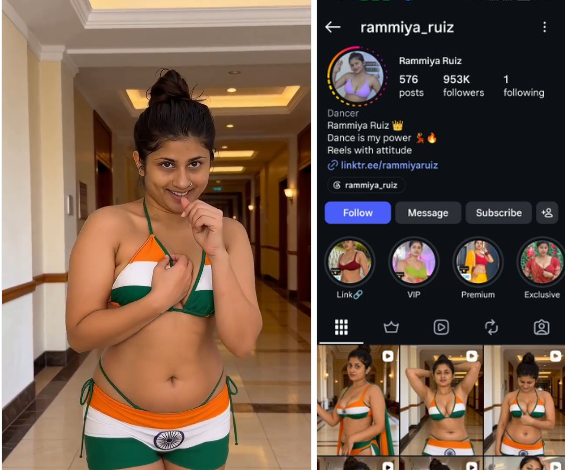
A series of social-media posts attributed to Rammiya Ruiz has sparked a debate online after users claimed that a woman was seen dancing in a bikini featuring the colours and design of the Indian Tricolour. The posts have triggered criticism from sections of social media, with some users alleging that the imagery amounts to disrespect toward the Indian National Flag and calling for authorities to examine the matter.
However, the specific Instagram posts and the identity of the person shown could not be independently verified from reliable sources at the time of publication. Search results for “Rammiya Ruiz” primarily lead to social-media and third-party pages rather than a verified news report establishing the incident. Therefore, claims linking the creator or the video to a specific offence should be treated as allegations rather than established facts.
Why Is the Tricolour Reel Controversial?
The controversy centres on whether the garment shown in the alleged Reel constitutes use of the Indian National Flag, rather than simply clothing inspired by the saffron, white and green colour palette.
That distinction is important because Indian law specifically regulates the use of the National Flag and representations of it.
The Prevention of Insults to National Honour Act, 1971 states that a person who, in a public place or within public view, burns, mutilates, defaces, defiles, disfigures, destroys, tramples upon or otherwise shows disrespect to or brings the Indian National Flag into contempt can face imprisonment of up to three years, a fine, or both.
The law’s definition of disrespect specifically includes using the National Flag as a portion of costume, uniform or accessory worn below the waist, as well as printing or embroidering it on certain items including undergarments or other dress material.
What Does the Flag Code Say?
The Flag Code of India, 2002, together with the Prevention of Insults to National Honour Act, governs the display and use of the National Flag. The Government has stated that members of the public can display the Tricolour on appropriate occasions, provided it is done consistently with the dignity and honour of the National Flag.
Government guidance also states that the National Flag should not be used as a portion of costume, uniform or an accessory worn below the waist, or be printed on specified dress materials.
Therefore, if the alleged garment actually reproduces the Indian National Flag, rather than merely using similar colours in a fashion design, the circumstances could raise legal questions. Whether an offence has actually occurred, however, would depend on the facts and any assessment by the competent authorities.
Netizens Demand Action
The alleged Reel has generated criticism from users who argue that national symbols should not be incorporated into provocative or inappropriate content.
Some commenters have demanded that the authorities investigate the posts and determine whether they violate India’s rules governing the National Flag.
At the same time, online outrage should not be treated as proof of criminal wrongdoing. Social-media users frequently repost videos without establishing their original source, context or date. In this case, no verified police complaint, FIR, arrest or official investigation connected specifically to the alleged Rammiya Ruiz Reel was identified in the sources reviewed for this article.
A Larger Debate Around Social Media
The controversy reflects a recurring conflict between viral content and restrictions governing national symbols. The Government’s official guidance emphasises that the National Flag holds a unique position of honour and should be displayed with dignity and respect.
The issue becomes more complicated when creators use Tricolour-inspired designs for fashion, entertainment or social-media content. Not every use of saffron, white and green necessarily constitutes use of the National Flag; the design, representation and circumstances matter.
What Happens Next?
If the posts are authentic and authorities receive a complaint, officials would have to determine whether the material depicts the National Flag or a representation covered by the applicable law and whether the conduct amounts to legally actionable disrespect.
For now, the controversy remains primarily a social-media debate, and claims that a particular person has committed an offence should not be presented as confirmed unless supported by an official investigation or reliable reporting.